The alchemy of coffee.
From origin to cup.
Even the finest machine in the world can only extract flavors developed during roasting. Learn how to decode bean labels, origins, and roast degrees.
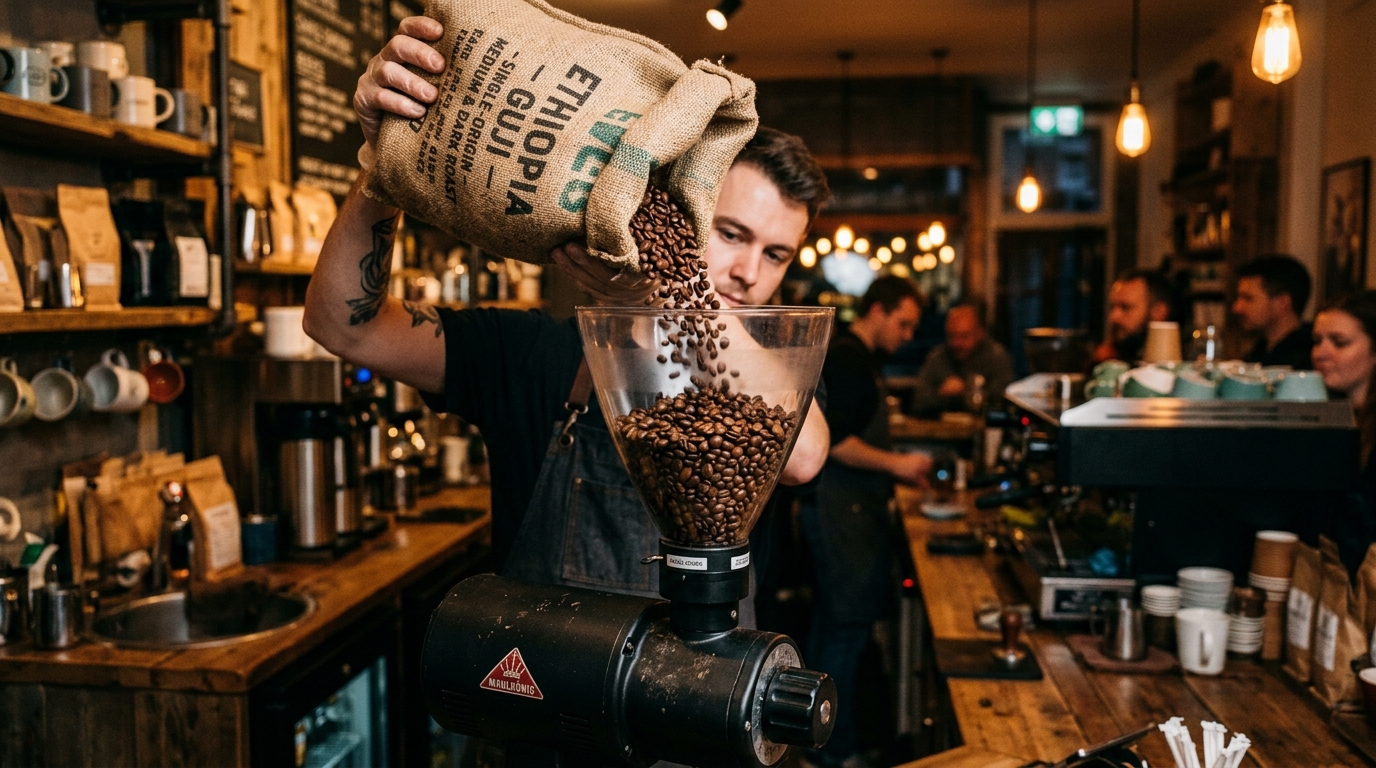
Flavor Spectrum
The 3 main roast profiles.
Light Roast (Blonde)
Fruity, floral notes with sparkling crisp acidity. Ideal for precision manual espresso machines (Breville) that allow brewing at higher temperatures (94°C).
Medium Roast
Milk chocolate, roasted hazelnut, and sweet caramel notes. The universal roast recommended for all automatic bean-to-cup machines (Bellucci, De'Longhi, Miele).
Dark Roast
Full-bodied, dark cocoa bitterness with dense crema. Perfect for cutting through milk in large lattes and cappuccinos.
Post-Harvest Processing
3 main coffee processing methods.
Before roasting, the green bean extracted from the coffee cherry shapes its acidity and body depending on drying techniques.
Washed Process
Fruit pulp is depulped immediately with water. Result in cup: pristine flavor clarity, vibrant acidity, and an elegant light body.
Natural (Dry) Process
Whole cherries dry under the sun. Beans absorb fruit sugars during drying. Result: syrupy heavy body with intense ripe blueberry notes.
Honey Process
Beans dry with sticky mucilage intact. The sweet spot compromise: combining natural sweetness with washed cup cleanliness.
3 iconic single-origin terroirs.
Elevation, volcanic soil composition, and climate shape the cup profile of single-origin beans.
Ethiopia & East Africa
High-altitude growing. Jasmine floral, bergamot, black tea, and citrus brightness.
Colombia & Central America
Impeccable balance. Smooth caramel, dark chocolate, toasted almond, and red apple crispness.
Sumatra & Asia-Pacific
Rich volcanic soils. Very thick velvet body, cedar notes, sweet spice, and raw cocoa powder.
CO2 Degassing: peak flavor window.
Freshly roasted coffee beans are packed with carbon dioxide gas (CO2). Coffee brewed too fresh (< 5 days post-roast) off-gasses violently under extraction pressure, producing false bubbly crema and sour carbonic acid notes.
Days 1 to 6
Intense off-gassing. Let beans rest before grinding for espresso.
Days 7 to 30 ★ APEX
The golden brewing window! Perfect flavor balance and thick crema.
After 45 Days
Gradual lipid oxidation. Crema density fades away.
Beware of oily and caramelized coffee beans!
Beans roasted to extreme dark levels (often visibly shiny with surface oil) secrete heavy oils. In automatic bean-to-cup machines with built-in ceramic or steel burrs (Bellucci, De'Longhi, Miele), these oils bind fine coffee dust and eventually clog the grinder chute completely.
Always favor matte-surfaced medium roast beans for automatic grinders!
Next Step: Compare Machine Technologies
Which machine type fits your daily morning routine?
Chapter 03: Manual vs Automatic →